



Pursuing a PhD is often described as an exciting intellectual journey, an opportunity to explore new knowledge, challenge existing ideas, and achieve one of the highest academic qualifications.
Yet behind this rewarding experience lies a reality that is not always openly discussed: loneliness. As PhD supervisors, we regularly meet our students, discuss their research, review their writing, and guide them through academic challenges. However, despite having supervisors, colleagues, friends, and family members, doctoral students may still feel deeply alone. This led my colleague and me to reflect on an important question: Are our PhD students lonely, even when they receive regular academic support? To explore this, we conducted a small survey involving 20 PhD students currently under our supervision. We wanted to understand whether they experienced loneliness, what they found emotionally difficult, and how they coped with their struggles.
What Our Students Told Us
We conducted a small-scale survey among local and international PhD students in language-related fields. The findings indicated that 70% of respondents had experienced loneliness during their doctoral studies. Although the findings cannot be generalised to all doctoral researchers across fields, the responses revealed experiences that deserve attention. Some students described loneliness during long periods of independent research, particularly while writing or analysing data. Others associated it with uncertainty about academic progress, a lack of motivation, or feeling that nobody understood their research challenges. Homesickness was another recurring concern, particularly among students studying away from their families. Interestingly, some students enjoyed working independently, while one described how friendships helped overcome loneliness experienced earlier in doctoral study. This reminds us that being alone and feeling lonely are not necessarily the same thing. Our observations are consistent with previous studies on doctoral education, which have identified loneliness and social isolation among both local and international postgraduate students. Research suggests that loneliness can emerge at different stages of doctoral study and may be associated with prolonged independent work, uncertainty about research progress, and limited social interaction. Studies have also linked doctoral isolation with stress, self-doubt, and a reduced sense of belonging within academic communities. At the same time, research highlights the importance of supportive supervision and peer relationships in helping students navigate these challenges. These findings suggest that the experiences reported by our students reflect concerns extending beyond our immediate academic environment.
Why Is the PhD Journey So Lonely?
Unlike undergraduate or taught master's programmes, doctoral research is largely an individual journey. Students may attend seminars, meet supervisors, and participate in academic activities, but much of their research takes place independently. They spend months exploring research questions, reviewing literature, collecting data, and attempting to make an original contribution to knowledge. Sometimes, they work for weeks without seeing meaningful progress. A chapter may require repeated revisions, a promising research idea may become difficult to defend, or data analysis may produce unexpected results. As supervisors, we recognise that uncertainty is part of research. However, for students experiencing these challenges personally, uncertainty can become frustration, self-doubt, and emotional exhaustion. Several students in our survey described questioning their abilities, losing confidence, or struggling to remain motivated. Another challenge is that people outside academia may not fully understand doctoral research. Friends and family may assume that students have flexible schedules or that writing a thesis is simply a matter of putting words on paper. Yet hours spent reading, thinking, and attempting to solve research problems may produce no immediate visible result. This invisible effort can leave students feeling misunderstood. Perhaps doctoral loneliness is not simply an individual problem but is also connected to the structure of doctoral education itself.
The Struggles Students Do Not Always Share
One particularly interesting aspect of our survey concerned how students cope with emotional difficulties. While some seek support from family, friends, fellow students, or supervisors, others prefer to manage their struggles privately. Several students explained that they did not want to burden people around them. Others felt that because pursuing a PhD was their personal decision, they should take responsibility for managing its difficulties. This raises an uncomfortable question: How many PhD students appear to be coping well simply because they choose not to share their struggles? A student may attend a supervisory meeting, discuss research progress, and leave without mentioning the anxiety or personal challenges they are experiencing. Our survey also reminded us that doctoral students have responsibilities beyond their academic work. Some are parents or caregivers, while others face personal difficulties or concerns about loved ones. As supervisors, we often see the academic side of our students, but we may not always recognise the emotional effort required to keep going. A supervisor can guide the research, but cannot walk every step of the emotional journey with the student.
What Can Supervisors Do to Make the Journey Less Lonely?
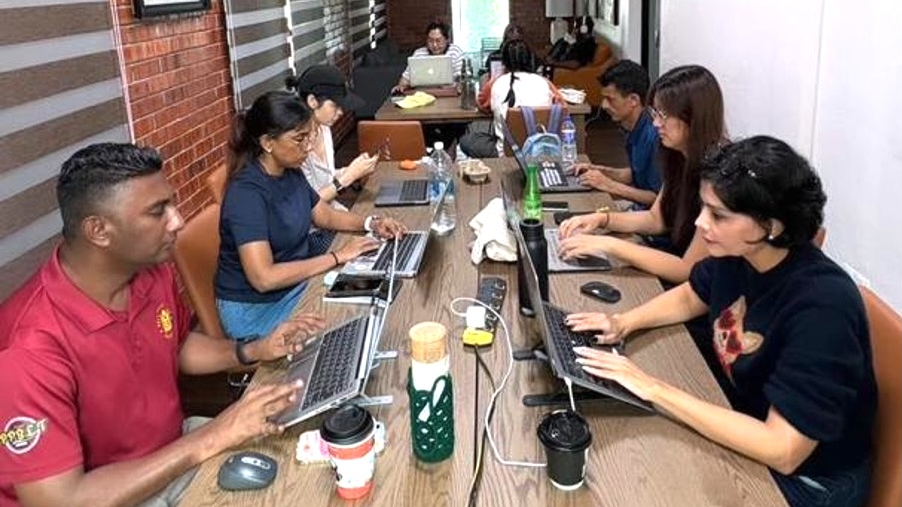
We cannot eliminate every difficulty associated with pursuing a PhD, nor should we remove the independence necessary for students to develop as researchers. However, we can create a more supportive doctoral experience. First, we should occasionally look beyond research progress. Supervisory meetings naturally focus on chapters, methodologies, publications, and deadlines. Yet a simple question such as "How are you coping with your PhD journey?" may encourage students to share concerns they would otherwise keep to themselves. Second, we should help students recognise that uncertainty and setbacks are normal parts of research. Students may interpret repeated revisions or slow progress as evidence of personal inadequacy. Helping them understand that research is rarely straightforward may reduce unnecessary self-doubt. Third, we should encourage stronger relationships among PhD students. One respondent highlighted the absence of a shared postgraduate workspace as a barrier to building connections, while another suggested more social activities. Informal gatherings, writing groups, and shared research spaces could help students develop a greater sense of belonging. Fourth, we should recognise that students have lives beyond their research. Family responsibilities, personal difficulties, and emotional pressures do not disappear when someone enrols in a PhD programme. Understanding and reasonable flexibility can make a meaningful difference. Finally, supervisors are not expected to become professional counsellors. However, we can listen, demonstrate empathy, maintain appropriate boundaries, and encourage students to seek professional support when necessary.
A Final Reflection
Our small survey encouraged us to look beyond the academic dimensions of supervision and reflect more deeply on the human experience of pursuing a PhD. As supervisors, we celebrate successful publications, completed chapters, conference presentations, and graduation ceremonies. But behind these achievements are countless hours of invisible effort, personal sacrifices, and moments of self-doubt that may never appear in a progress report. The experiences shared by our students, together with findings from previous research, remind us that doctoral loneliness deserves greater attention. A PhD is not simply a thesis waiting to be completed. It is also a personal journey that challenges students intellectually, emotionally, and socially. Independence is essential to becoming a researcher, but it should never be confused with isolation. We may not be able to walk the PhD journey for our students, but we can certainly make sure they do not feel they have to walk it alone.